

Imagine a dedicated medical professional who relies on your association for critical industry updates and networking. They receive their annual renewal notice, but instead of a quick digital transaction, they must navigate a non-responsive web portal or, worse, mail a physical check. Frustrated by the hoops they’re jumping through, they set the task aside, and ultimately, their membership lapses. This exact scenario plays out frequently across associations.
High churn is rarely about your mission. Rather, it’s usually about operational roadblocks and poor user experiences. By identifying and resolving these common association membership mistakes, your team can eliminate unnecessary barriers, protect vital revenue streams, and create a resilient community.
Mistake 1: A Clunky Join and Renew Experience
Slowdowns in your sign-up and renewal workflows cause members to abandon the transaction and eventually lapse entirely. Today’s busy professionals don’t have time to navigate complicated technology or processes.
If prospects often abandon their registrations or existing members let their memberships lapse, a frustrating payment process might be to blame. Check to see if your association has created any of these barriers:
- Outdated workflows: Convoluted renewal paths require users to navigate a disorganized website to find your form or to re-enter information they’ve already given you.
- Lack of sufficient technology: Forcing members to print PDFs, mail physical checks, or navigate a confusing, non-mobile-friendly website alienates digital-native users who expect consumer-grade, one-click payment gateways.
Providing A Better Onboarding and Renewal Experience
Make it a breeze for members to renew or finish their initial sign-up by implementing these tech-forward solutions:
- Set up a mobile-responsive portal. Ensure your member portal works perfectly on smartphones, allowing professionals to renew directly from their mobile devices.
- Enable auto-renewals. Implement payment gateways equipped with auto-renewal functionality. This way, members don’t have to think twice about renewing, and your association’s team won’t have to chase payments.
- Offer a generous grace period. Extra time empowers them to correct an oversight without losing their benefits or tenure. iMIS’s member retention guide explains that “by treating a missed payment as an honest mistake rather than a cancellation, you save members who never intended to leave.”
Consider running a quick user experience audit by asking a staff member who rarely uses the portal to complete a mock renewal on their smartphone. Documenting where they stumble provides actionable data to refine the payment interface.
Mistake 2: Operating with Fragmented Data
Data forms the foundation of a tailored membership experience, but it loses its utility when scattered across disconnected software. Disjointed systems prevent your staff from understanding how members interact with your organization.
Plus, siloed information causes significant operational challenges. For one, keeping data in isolated platforms forces your team to execute manual CSV exports and imports, drastically increasing the likelihood of lost records and administrative errors. It also risks duplicate records. For example, it’s easy to lose track of data when you manage event registrations in one platform, email marketing in another, and dues tracking in a separate spreadsheet.
Improving Your Association’s Data Infrastructure
Modernize your approach to data management by creating a single source of truth (SSoT). Integrating your technology stack ensures all departments query the exact same central database, preventing miscommunication and redundant outreach.
One of the best solutions is to invest in a purpose-built engagement management system (EMS) that comes equipped with all the tools and integrations you need. Unlike a standard CRM that relies on third-party add-ons, an EMS natively combines your database, financials, marketing, events, and website.
Plus, native integrations extend its functionality further without compromising data quality. For instance, TopClass recommends choosing a database that works with your LMS to enable single sign-on between systems and automatically update member records with new course completions.
By centralizing your operations, an EMS allows your association to:
- Track every interaction—from dues payments to community posts—within a single member profile.
- Trigger automated workflows across departments, like sending a targeted email the moment a member registers for an event.
- Keep your marketing, finance, and membership teams aligned using real-time, shared data.
Ultimately, an EMS frees your staff from fighting incompatible software, so they can focus on building stronger member relationships.
Mistake 3: Generic Communication Blasts
Members expect resources tailored to their career stage. When you rely on mass messaging, your specialized content quickly becomes background noise.
Sending identical content to diverse audiences assumes everyone shares the same priorities, which isolates professionals seeking niche industry resources. Generic outreach also ignores members’ career stages. For example, the exact same newsletter and event invites to a retired executive and a first-year student member guarantee low open rates, high bounce rates, and mass unsubscribes.
Personalizing Your Association’s Outreach
To break through the noise and demonstrate value, your association must shift to data-driven personalization. By leveraging the information stored in your central database, you can deliver the right message to the right member at the exact right time.
Try these strategies to tailor your communications:
- Segment your audience by member type, career stage, or geographic location to ensure every message feels highly relevant.
- Use dynamic content to display customized articles, event recommendations, and member benefits within your newsletter and member portal.
- Set up behavioral triggers that automatically send targeted follow-up resources and eCourse recommendations based on a member’s recent event attendance or website activity.
Members who receive tailored resources are more likely to engage, renew, and view your association as an indispensable career partner. Think through what criteria (such as member type, region, or committee involvement) would be the most useful for segmenting your current audience.
Mistake 4: Failing to Measure Member Engagement
Without hard data, your team is just guessing about membership health. Waiting until renewal season to identify dissatisfied individuals means you miss the window to intervene. Ignoring engagement signals allows valuable members to quietly drift away long before their annual expiration date. Then, you’ll only realize a member was dissatisfied when their payment officially lapses.
Monitoring Member Engagement
Check whether your modern membership management software includes engagement scoring, so you never have to question whether your members are engaged. With this, you can assign weighted numerical values to specific interactions, giving your team an objective look at who is active and who is fading into the background.
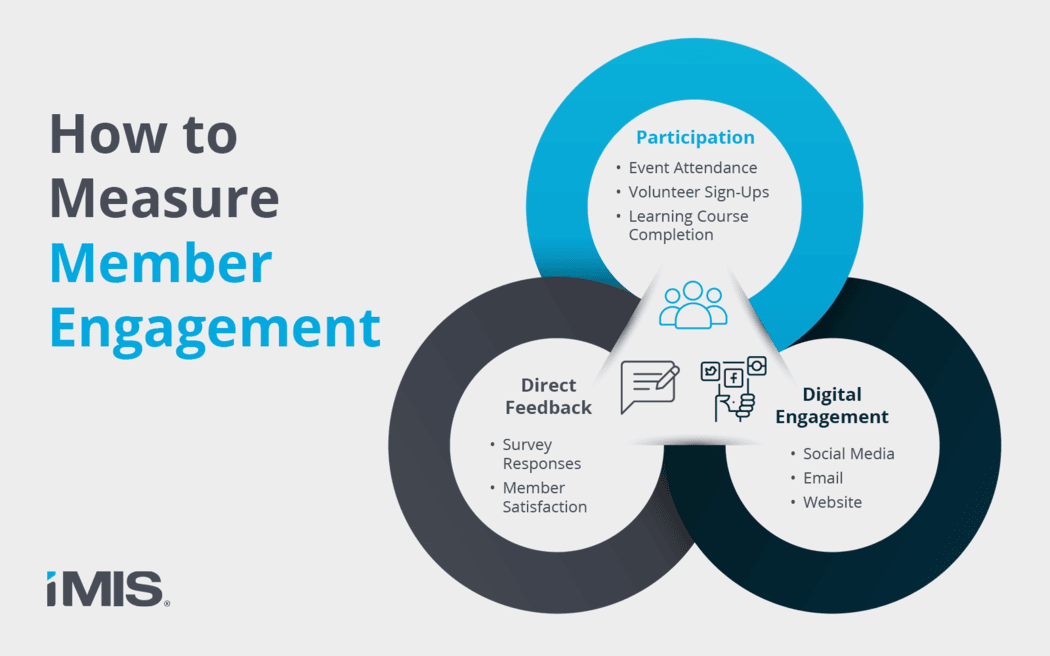
Some common activities to factor into this score could include:
Alt text: Important factors to help measure member engagement.
- Participation: Attendance at events like webinars or multi-day annual conferences, volunteer participation, or online course completion
- Digital Engagement: Logging into the member portal, participating in your online community, downloading resources like industry whitepapers, interacting with your emails, or engaging with your association’s social media posts
- Direct Feedback: Survey responses and self-reported satisfaction through surveys and polls
When you spot at-risk members, send a brief survey asking what specific resources they feel are missing. This shows you value their feedback and provides the blueprint you need to win them back.
Wrapping Up
Addressing these common membership pitfalls requires good technology and a proactive strategy. Not sure where to start? Map your current member journey from the initial sign-up page through the end of their first year. Identifying where members experience friction will help you stabilize retention and build a strong foundation for sustainable growth.